
Scenic Train Journeys
What Scenic Train Journeys Feel Like in the Andes
Train journeys in Peru are experiences where the journey itself becomes part of the destination. Traveling through the Andes by rail reveals landscapes, cultures and rhythms that cannot be experienced from the road or the air. From scenic routes to Machu Picchu to the high-altitude journey between Cusco and Puno, these routes offer some of the most memorable rail experiences in South America.
Operated by renowned companies such as Belmond and Inca Rail, each journey combines panoramic views, attentive service and thoughtfully designed onboard environments. Whether through refined luxury, contemporary comfort or immersive slow travel, every route offers a distinct way to experience the country.
At Azonkoy, train journeys are carefully integrated into each itinerary, ensuring that timing, service level and pace align seamlessly with the traveler’s expectations—transforming every rail experience into a meaningful part of the journey.
The train as an experience, not just transportation

In Peru, traveling by train is not simply a way to move between destinations — it is a way of experiencing the country at a different pace. The routes are designed to follow rivers, valleys and mountain corridors where the landscape unfolds gradually, allowing travelers to observe changes in altitude, vegetation and light along the journey.
Unlike road travel, train journeys offer a continuous visual connection with the surroundings. Panoramic windows, open observation areas and comfortable seating invite travelers to slow down, disconnect and fully engage with the scenery. The experience feels calm, immersive and uninterrupted, making the journey itself one of the highlights of the trip.
For travelers who value slow travel and meaningful transitions between destinations, these rail routes transform movement into a moment of presence — where the act of traveling becomes as memorable as the places visited.
Iconic train routes in Peru and what makes them unique

Peru’s most iconic train journeys connect travelers with landscapes that are otherwise inaccessible or easily overlooked. The routes to Machu Picchu, departing from Ollantaytambo in the Sacred Valley or Poroy near Cusco, follow river valleys and mountain corridors that gradually transition into the cloud forest, creating a natural sense of arrival rather than a sudden destination.
Beyond Machu Picchu, the journey between Cusco and Puno stands out as one of South America’s most remarkable high-altitude rail routes. Crossing vast Andean plateaus, remote villages and open landscapes, this route offers a rare perspective of the Altiplano — a region defined by scale, silence and cultural continuity.
What makes these routes unique is not only their scenery, but the way they are experienced. Carefully designed schedules, comfortable onboard environments and panoramic viewpoints allow travelers to engage with the landscape without distraction. Each journey unfolds at a rhythm that invites observation and reflection, transforming the route itself into a meaningful part of the travel experience.
Train companies and service styles: understanding the experience onboard

Train journeys in Peru are operated by two main companies, each offering distinct service styles designed to suit different travel preferences: Belmond and Inca Rail. Understanding these differences helps travelers choose the experience that best aligns with their expectations, pace and travel style.
Belmond is internationally recognized for creating refined rail experiences where elegance, service and atmosphere play a central role. Their trains emphasize spacious interiors, attentive onboard service and a sense of timeless travel, appealing to travelers who value immersion, comfort and a slower rhythm that enhances the journey itself.
Inca Rail offers a range of modern and comfortable options designed with flexibility and efficiency in mind. Their services focus on reliability, contemporary design and panoramic viewing, making them ideal for travelers who want a scenic and well-organized journey with varying levels of comfort and accessibility.
Rather than ranking one option above the other, these services represent different ways of experiencing the same landscapes. The choice depends on how travelers wish to engage with the journey — whether through refined luxury, contemporary comfort or a balance of both.
Duration, rhythm and the feeling of the journey
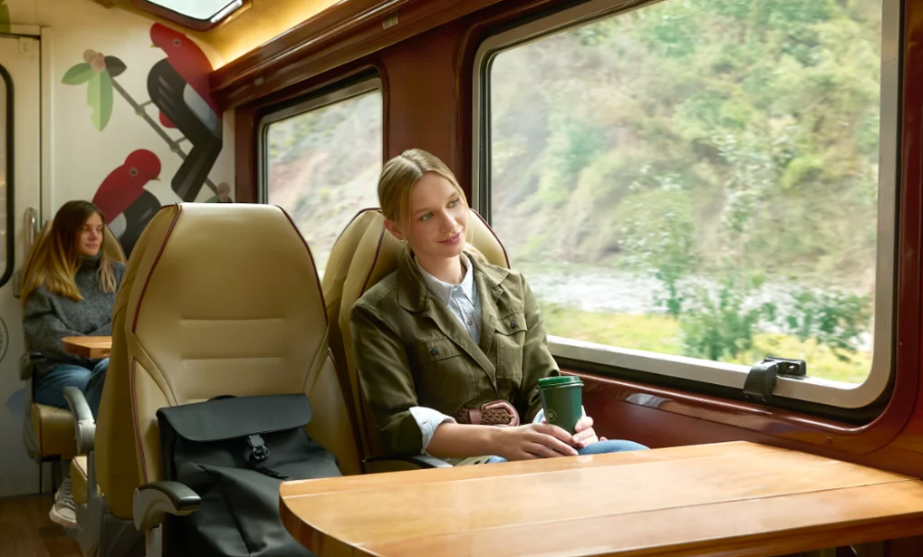
Train journeys in Peru are designed to be experienced at a measured and intentional pace. Depending on the route, travel times range from a few hours to a full day, allowing the landscape to unfold gradually rather than rushing travelers from one destination to another.
What defines these journeys is not only their duration, but how that time is experienced. The rhythm on board feels calm and unhurried, with space to observe, rest, converse or simply watch the scenery change through panoramic windows. The absence of pressure to “arrive quickly” creates a sense of ease that is often missing in other forms of travel.
For many travelers, this slower rhythm becomes one of the most valued aspects of the experience. The journey offers a pause between destinations — a moment to disconnect from logistics and reconnect with the environment — making arrival feel natural, grounded and unforced.
Who this experience is for — and who it may not be

Train journeys in Peru are especially suited for travelers who value the journey as much as the destination. This experience resonates with those who appreciate scenic travel, a relaxed pace and the opportunity to observe landscapes in comfort while transitioning between places.
It is ideal for travelers interested in slow travel, cultural exploration and thoughtfully designed experiences, as well as for those who enjoy iconic train routes and immersive ways of moving through a destination. Couples, independent travelers and guests seeking a refined yet unpretentious travel style often find these journeys particularly rewarding.
However, this experience may not be the best fit for travelers whose priority is speed or reaching Machu Picchu as quickly as possible. Train journeys are designed to be savored, not rushed — offering depth, presence and a sense of continuity rather than immediacy.
How Azonkoy curates and integrates train journeys into the itinerary

At Azonkoy, train journeys are treated as meaningful travel moments rather than simple connections between destinations. Each route is carefully selected based on the traveler’s profile, timing preferences and overall travel rhythm, ensuring the journey feels natural and well integrated into the itinerary.
Beyond choosing the appropriate train and service level, attention is given to departure points, arrival flow and how the train experience aligns with the surrounding activities. This thoughtful coordination allows travelers to move seamlessly between regions, arriving relaxed and fully present for the next stage of the journey.
By designing itineraries around rhythm rather than speed, Azonkoy ensures that train journeys enhance the overall travel experience — adding depth, comfort and continuity to the way Peru is discovered.
Cusco – Machu Picchu by Train: a curated journey through landscape and transition

Traveling by train from Cusco to Machu Picchu is not only a change of location, but a gradual transition between worlds. The journey begins in the Andes and slowly descends toward the cloud forest, allowing travelers to witness shifts in altitude, vegetation and atmosphere that mirror the historical and spiritual significance of the route.
Departures from Poroy or Ollantaytambo offer different ways of entering the experience. While Poroy provides a direct connection from Cusco during the dry season, Ollantaytambo allows travelers to begin the journey from the Sacred Valley, extending the sense of continuity between landscapes, ancient settlements and natural corridors shaped by the Urubamba River.
What makes this journey distinctive is the way it prepares travelers for Machu Picchu itself. The rhythm of the train, the sound of the river and the enclosing mountains create a sense of anticipation and presence. Arrival in Aguas Calientes feels gradual rather than abrupt — as if the site is being approached with intention rather than urgency.
Beyond the physical route, this train journey reflects the Andean understanding of movement: travel as a process of adaptation and connection with the environment. By the time travelers reach Machu Picchu, they have already begun the experience — mentally and emotionally — long before stepping into the sanctuary.
→ Discover curated journeys to Machu Picchu by train

